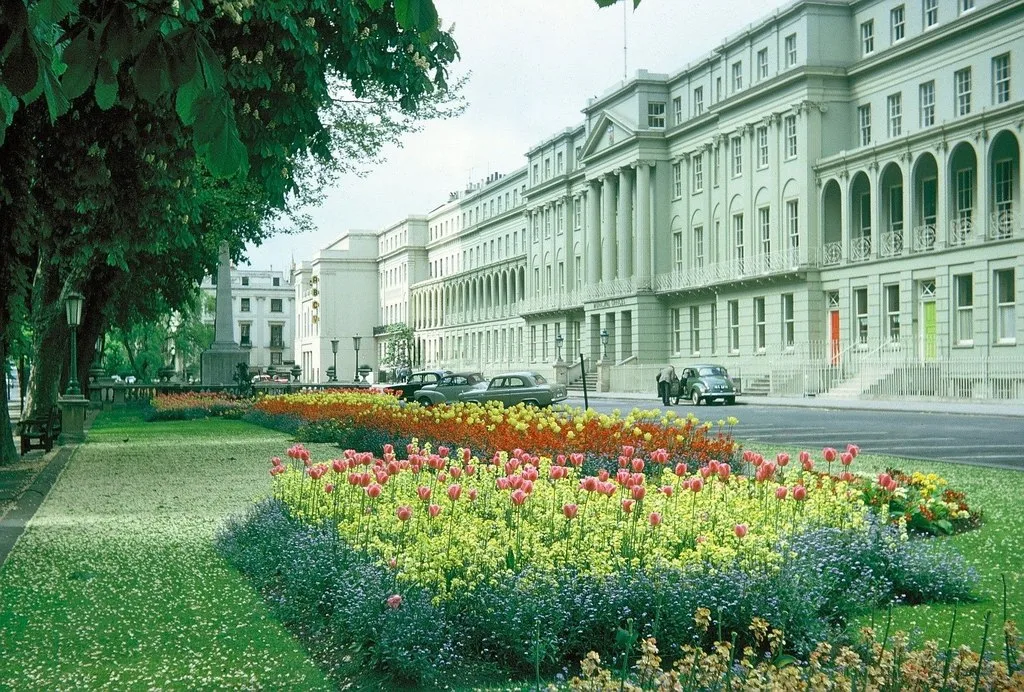

Cheltenham needs 821 homes a year and can show 2.69 years of land against a five-year test. Where that leaves objectors, and the two sites meant to fix it.
Cheltenham Borough Council has to find land for 821 new homes a year. Its own published position is that it can currently demonstrate 2.69 years’ worth, against a legal test that asks for five. That single number explains most of what happens in Cheltenham planning committees, and it is the council’s own figure, not a developer’s.
This page sets out where the numbers come from, what plan governs decisions today, what is replacing it and when, and the two strategic sites the whole strategy rests on.
The plan that governs Cheltenham today
The development plan for the borough has three sources, all listed by the council:
- the Gloucester, Cheltenham and Tewkesbury Joint Core Strategy 2011-2031, adopted in December 2017, which is the strategic tier;
- the Cheltenham Plan, adopted at full council on 20 July 2020, which allocates specific sites; and
- the surviving saved policies of the Cheltenham Borough Local Plan Second Review from June 2006.
The Joint Core Strategy turned five years old on 11 December 2022. Under paragraph 78 of the National Planning Policy Framework, once strategic policies are more than five years old, a council must calculate its housing land supply not against the plan’s own housing requirement but against its local housing need, worked out by the government’s standard method. That is what pushed Cheltenham’s annual requirement from 450 homes to a far larger figure.
Where 821 homes a year comes from
The standard method is arithmetic, not judgement. The council sets it out in full in its five-year housing land supply statement:
- Baseline. Take 0.8% of the borough’s existing dwelling stock. Cheltenham had 57,511 dwellings in 2024, so the baseline is 460.088 homes a year.
- Affordability adjustment. Take the mean of the five most recent median workplace-based affordability ratios published by the ONS. For Cheltenham that is 9.13, meaning the median house costs 9.13 times median local earnings. Because it is above 5, the formula applies an uplift: (9.13 minus 5) divided by 5, times 0.95, plus 1, giving an adjustment factor of 1.7847.
- Multiply. 1.7847 times 460.088 gives 821 homes a year, rounded down.
The figure changed sharply in December 2024, when the government rewrote the standard method. Cheltenham’s local housing need had been 545 a year until then. The council recorded 824 for 2024/25 and the latest calculation gives 821, a rise of about 51% overnight, with no change in the borough’s boundaries or its physical capacity.
Why the target has a 20 per cent buffer on top
The five-year requirement is not simply 821 times five. The National Planning Policy Framework adds a buffer where delivery has been significantly below target.
The Housing Delivery Test result published on 12 December 2024 showed that over the three years from 1 April 2020 to 31 March 2023, Cheltenham delivered 759 homes against 1,174 required, or 65%. Anything below 85% triggers a 20% buffer. So:
| Component | Calculation | Homes |
|---|---|---|
| Five-year local housing need | 821 a year × 5 years | 4,105 |
| With the 20% NPPF buffer | 4,105 × 1.2 | 4,926 |
| Deliverable supply identified | All sources, after a 22% lapse rate on small sites | 2,651 |
| Supply expressed in years | 2,651 ÷ 985 a year | 2.69 years |
A shortfall of that size matters for a practical reason. Where a council cannot demonstrate five years of deliverable housing land, the NPPF’s presumption in favour of sustainable development is engaged, and the balance in a planning appeal tilts towards the applicant. Failing the Housing Delivery Test does the same thing by a separate route, and Cheltenham is currently failing both.
Fourteen years of under-delivery
The council publishes its own completion record, and it is unflattering. Between 2011/12 and 2024/25 Cheltenham needed 6,866 homes and delivered 4,993, a cumulative shortfall of 1,871.
The council’s own explanation is blunt. Around half of the homes planned in the adopted development plan depend on two large developments in North West and West Cheltenham. Those sites are taking longer to come forward, which is why delivery hit only 65% in the last Housing Delivery Test.
The two sites the whole strategy rests on
North West Cheltenham, also known as Elms Park
A Joint Core Strategy strategic allocation, Policy A4. The outline application by Bloor Homes and Persimmon Homes for up to 4,115 new homes on land north of the A4019, west of Gallagher Retail Park and Swindon Village, was submitted in September 2016 and finally approved by the planning committees of both Cheltenham and Tewkesbury councils on 29 May 2025, subject to conditions and a section 106 agreement signed within nine months.
Building has already started on a smaller overlapping site, Land at Swindon Farm, permitted in June 2023. The applicant told the council there had been 156 completions as at 31 March 2025, that the full 4,285 net dwellings would not finish until 2042/43, and that peak build-out inside the five-year window would be 140 homes a year. The council has counted 380 homes from this allocation towards its five-year supply.
Nine years from application to permission, and eighteen years from permission to completion, is the practical meaning of a two-and-a-half-year land supply.
West Cheltenham, the Golden Valley site
The other strategic allocation, Policy A7, guided by the Golden Valley Supplementary Planning Document adopted in July 2020. It is being brought forward by four separate applicants, and the housing numbers across the whole allocation are:
| Site | Net dwellings |
|---|---|
| St Modwen | 1,100 |
| Cheltenham Borough Council and HBD, southern parcel | 576 |
| Cheltenham Borough Council and HBD, northern parcel | 443 |
| Nema | 365 |
| Whole allocation | 2,484 |
The southern parcel was approved by Cheltenham’s planning committee on 4 July 2025, subject to conditions and a section 106 within nine months. Planning performance agreements are in place with every developer across the allocation. St Modwen’s promoter told the council it expected to start on site in 2026 with first completions in the 2026-27 financial year.
Between them, the two allocations account for 865 of the 2,651 homes in the council’s deliverable five-year supply, which is why their timing decides whether the borough’s position improves or not.
What replaces the Joint Core Strategy, and when
Cheltenham, Gloucester and Tewkesbury are jointly preparing a Strategic and Local Plan, which when adopted will supersede the Joint Core Strategy, the Cheltenham Plan and the remaining saved 2006 retail policies in one go.
The timetable, from the Local Development Scheme adopted by Cheltenham’s Cabinet on 14 July 2026 and published on 23 July 2026:
| Stage | When |
|---|---|
| Evidence gathering and engagement (Regulation 18) | February 2025 to September 2026 |
| Council approvals for the Pre-Submission plan (Regulation 19) | October 2026 |
| Consultation on the Pre-Submission plan | Late October or early November to December 2026 |
| Submission to the Secretary of State (Regulation 22) | December 2026 |
| Examination hearings, inspector's report and adoption | To be confirmed, subject to the inspector's programme |
The Regulation 19 consultation, due to open around the end of October 2026, is the last formal chance to comment before the plan goes to a government inspector. The council is clear that until the new plan is adopted, only limited weight can be given to it in deciding applications, and the existing plans stand.
One more thing is worth having in mind, and it changed on 7 September 2026. The government had decided in July to abolish Cheltenham Borough Council in April 2028 and fold it into a Gloucestershire-wide unitary authority. Ministers have now told councils to stop implementing that decision while the whole reorganisation programme is reviewed, with no date set for the review reporting. So it is no longer clear which council will inherit the plan being submitted this December. We cover the pause and what is still standing in Cheltenham council abolition paused.
What this means if you are objecting to an application
Three practical points follow from the numbers above.
The tilted balance is real. With 2.69 years of supply and a 65% Housing Delivery Test result, the presumption in favour of sustainable development applies. Objections that amount to “there is enough housing already” will not carry weight. Objections grounded in a specific adopted policy, on heritage, flooding, highways capacity or the Cotswold Beechwoods Special Area of Conservation, still can.
Small-site supply is discounted. The council applies a 22% lapse rate to small sites of one to four dwellings that have permission but have not started, on the basis established at the Joint Core Strategy examination.
Where to look things up. Cheltenham runs Idox Public Access at publicaccess.cheltenham.gov.uk, with a weekly list of validated applications and a search by address or reference, and shows the comment deadline on each application.
Frequently asked questions
How many houses does Cheltenham have to build each year?
821, the borough’s minimum local housing need under the government’s standard method. That figure rose from 545 in December 2024 when the method was rewritten. Against the five-year test, and with the 20% buffer applied, the requirement is 4,926 homes between 1 April 2025 and 31 March 2030.
Does Cheltenham have a five-year housing land supply?
No. The council’s own statement, published on 25 September 2025 and measured as at 31 March 2025, puts the figure at 2.69 years, or 2,651 deliverable homes against a requirement of 4,926.
What is the Cheltenham Local Plan?
Two documents, in practice. The Joint Core Strategy 2011-2031, adopted December 2017 with Gloucester and Tewkesbury, sets strategy. The Cheltenham Plan, adopted 20 July 2020, allocates the sites. Both will be replaced by the Strategic and Local Plan, due to be submitted for examination in December 2026.
What is happening at Elms Park in Cheltenham?
The North West Cheltenham strategic allocation, for up to 4,115 homes, was approved by the Cheltenham and Tewkesbury planning committees on 29 May 2025. There had been 156 completions on the overlapping Swindon Farm site as at 31 March 2025, and the developer expects the full scheme to run to 2042/43.
What is the Golden Valley development?
The West Cheltenham strategic allocation, guided by the Golden Valley Supplementary Planning Document adopted in July 2020, comprising 2,484 homes across four promoters plus employment land. The southern parcel was approved on 4 July 2025.
Where can I see planning applications in Cheltenham?
On the council’s Public Access portal at publicaccess.cheltenham.gov.uk, which carries the weekly list of validated applications and lets you search by address, reference or ward.
Related
- Cheltenham roadworks, parking and travel: the £372m M5 Junction 10 rebuild, which is the infrastructure both strategic allocations depend on.
- Cheltenham house prices: the 9.13 affordability ratio that drives the housing target, and what homes actually sell for sector by sector.
- Things to do in Cheltenham.
Sources
- Cheltenham Borough Five-Year Housing Land Supply Statement as at 31 March 2025, published 25 September 2025, for the 821 standard method figure, the 2.69-year supply, the 20% buffer, the completions record, the 22% lapse rate and the North West and West Cheltenham site details.
- Cheltenham Borough Council Local Development Scheme 2026-2029, adopted by Cabinet 14 July 2026, for the Strategic and Local Plan timetable.
- Cheltenham Borough Council, the Development Plan for the three components of the adopted plan and their dates.
- Cheltenham Borough Council, monitoring reports and evidence base for the Housing Delivery Test action plan and the council’s own account of the 65% result.
- Strategic and Local Plan, frequently asked questions for the joint plan’s status and the weight it currently carries.
Planning positions change with each annual monitoring cycle. Check the council’s own pages before relying on any figure here.
Have your say